Armenia packs an extraordinary range of terrain into a small country. Within a few hours of Yerevan, you can drive smooth highways, winding mountain roads, high-altitude passes, and unpaved tracks to remote monasteries. The car you choose has a real impact on comfort, safety, and which destinations you can actually reach.
This guide explains how to match your vehicle to your itinerary rather than simply defaulting to the biggest or cheapest option.
Understanding Armenian Road Types
Armenian roads fall into a few broad categories, and recognizing them helps with vehicle selection:
Paved highways connect Yerevan to major cities — Gyumri, Vanadzor, Sevan, Jermuk. These are well-maintained, clearly signed, and suitable for any car. The highway to Lake Sevan, for example, is a comfortable drive in an economy hatchback.
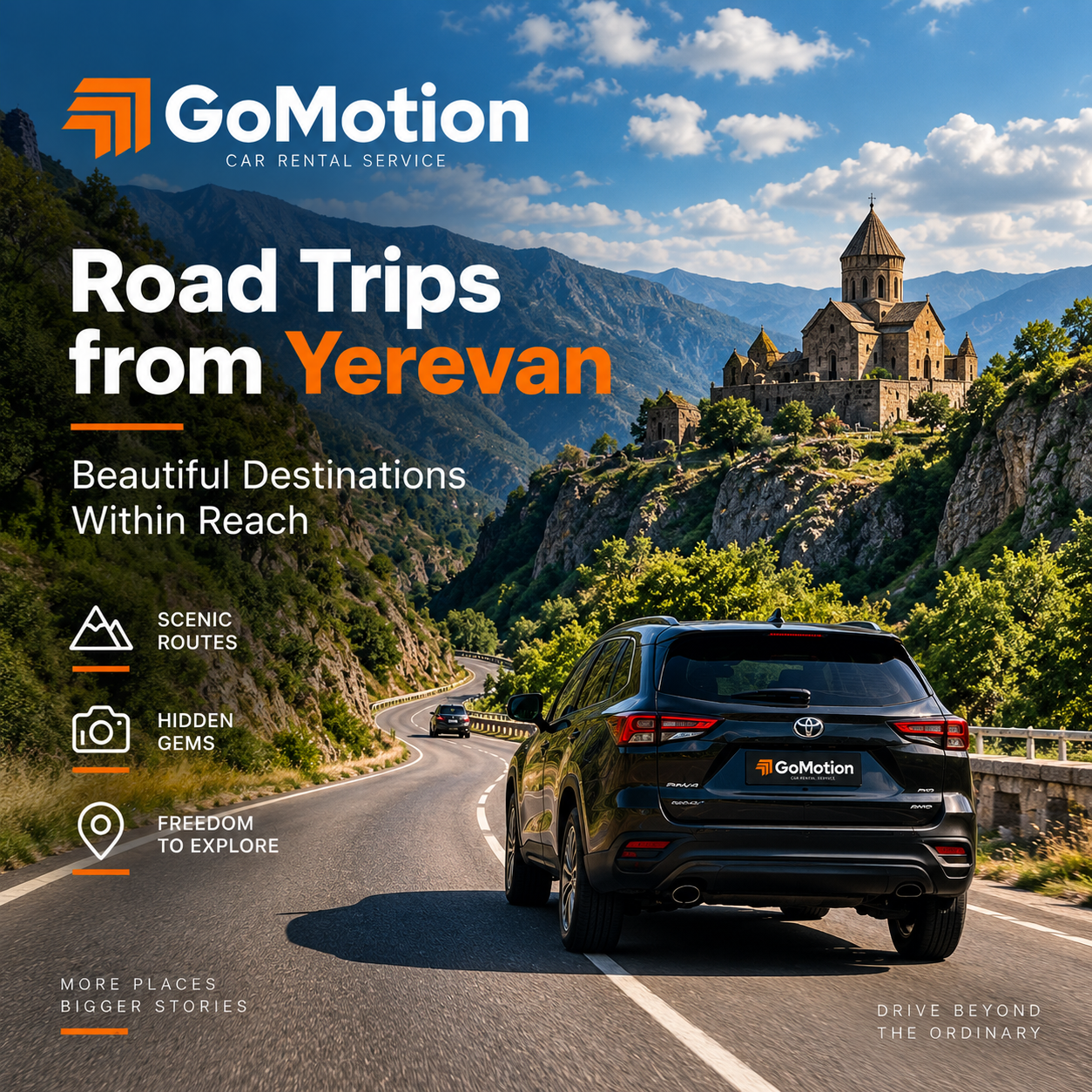
Mountain roads lead to many of Armenia's most famous destinations. The route to Tatev, the approach to Noravank through its red-rock canyon, and the roads through the Debed Canyon are paved but involve steep gradients, tight switchbacks, and occasional rough patches. A sedan handles these in dry summer conditions, but ground clearance becomes a factor when surfaces deteriorate.
Unpaved tracks reach remote monasteries, alpine meadows, and villages in Syunik and Tavush. These vary from packed gravel to rutted dirt, and conditions worsen after rain. Low-clearance vehicles risk scraping or getting stuck.
High-altitude passes like Selim (2,410 m) combine steep gradients with exposure to weather. Even in summer, conditions can change quickly. In winter, some passes become impassable.
When an Economy Car Is the Right Choice
If your trip stays on paved roads — Yerevan city, the highway to Lake Sevan, a day trip to Garni and Geghard, the motorway to Gyumri — an economy car is the practical choice. You get better fuel efficiency, easier parking in Yerevan's tight streets, and lower daily cost.
Economy cars handle the paved road to Noravank comfortably and can reach most lakeside spots around Sevan. For a summer city-plus-highway itinerary, there is no practical reason to pay for a larger vehicle.
When a Sedan Makes Sense
A sedan adds comfort and luggage space without the fuel cost of an SUV. For business travel in Yerevan, longer highway drives, or small families with suitcases, a sedan strikes a good balance.
Sedans handle the main highways well and offer a smoother ride over longer distances than an economy car. If your trip combines Yerevan meetings with a weekend drive to Dilijan via the tunnel road, a sedan is a natural fit.
Where sedans reach their limit is on rough unpaved roads and steep mountain tracks. Ground clearance is lower than a crossover or SUV, which means you feel every pothole and risk scraping the underside on rutted surfaces.
When You Need an SUV
An SUV or 4WD becomes the right choice in several scenarios:
Remote destinations. The unpaved approach to certain monasteries, the tracks through Syunik Province, and off-the-beaten-path villages often require higher ground clearance. A sedan might physically make it in dry conditions, but an SUV handles the surface confidently.
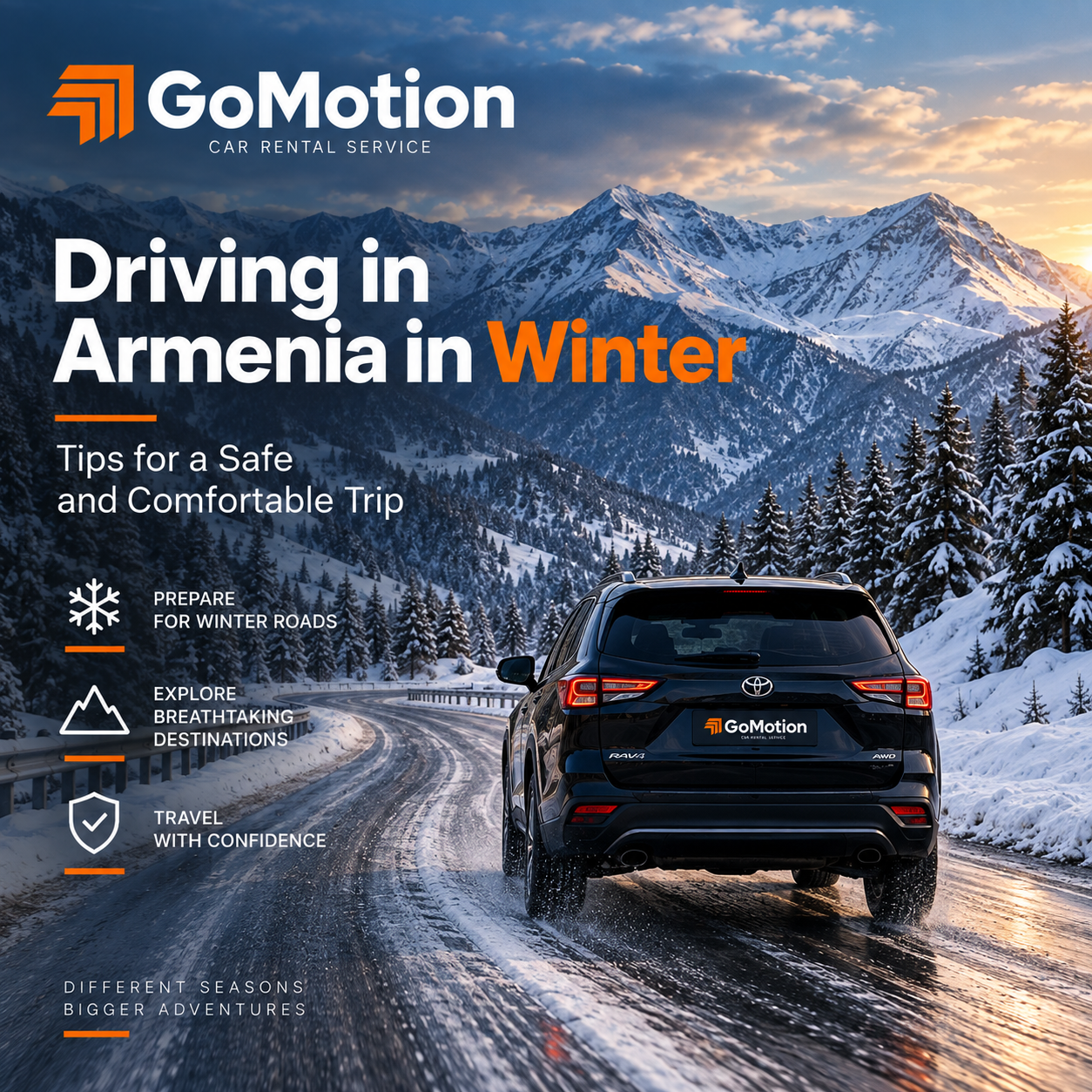
Winter travel. Snow, ice, and partially ploughed roads make all-wheel drive and ground clearance important. For any mountain driving between November and March, an SUV is the safer option.
Mountain passes. Steep gradients combined with loose gravel or wet conditions favour vehicles with better traction and suspension travel. Routes like the Selim Pass are more comfortable and safer in a capable SUV, particularly in shoulder seasons.
Larger groups. If you are travelling with four or five people plus luggage, an SUV offers the space that smaller cars cannot. Armenian road trips tend to accumulate bags — market purchases, hiking gear, cold-weather layers.
Choosing by Itinerary, Not by Category
The most practical approach is to plan your route first, then choose the car to match:
Other Factors Worth Considering
Transmission. Automatic transmission is easier on steep mountain roads with frequent gear changes. If you are not accustomed to driving manual on steep inclines, choose automatic.
Fuel. Economy cars use significantly less fuel than SUVs. For a highway-only trip, the fuel savings over a week can be meaningful. For a trip that demands an SUV, the extra fuel cost is worth the capability.
Passenger comfort. Mountain roads involve sustained turns and elevation changes. Passengers in the back seat of a smaller car may find long mountain drives less comfortable than in a larger vehicle with better suspension.
The Bottom Line
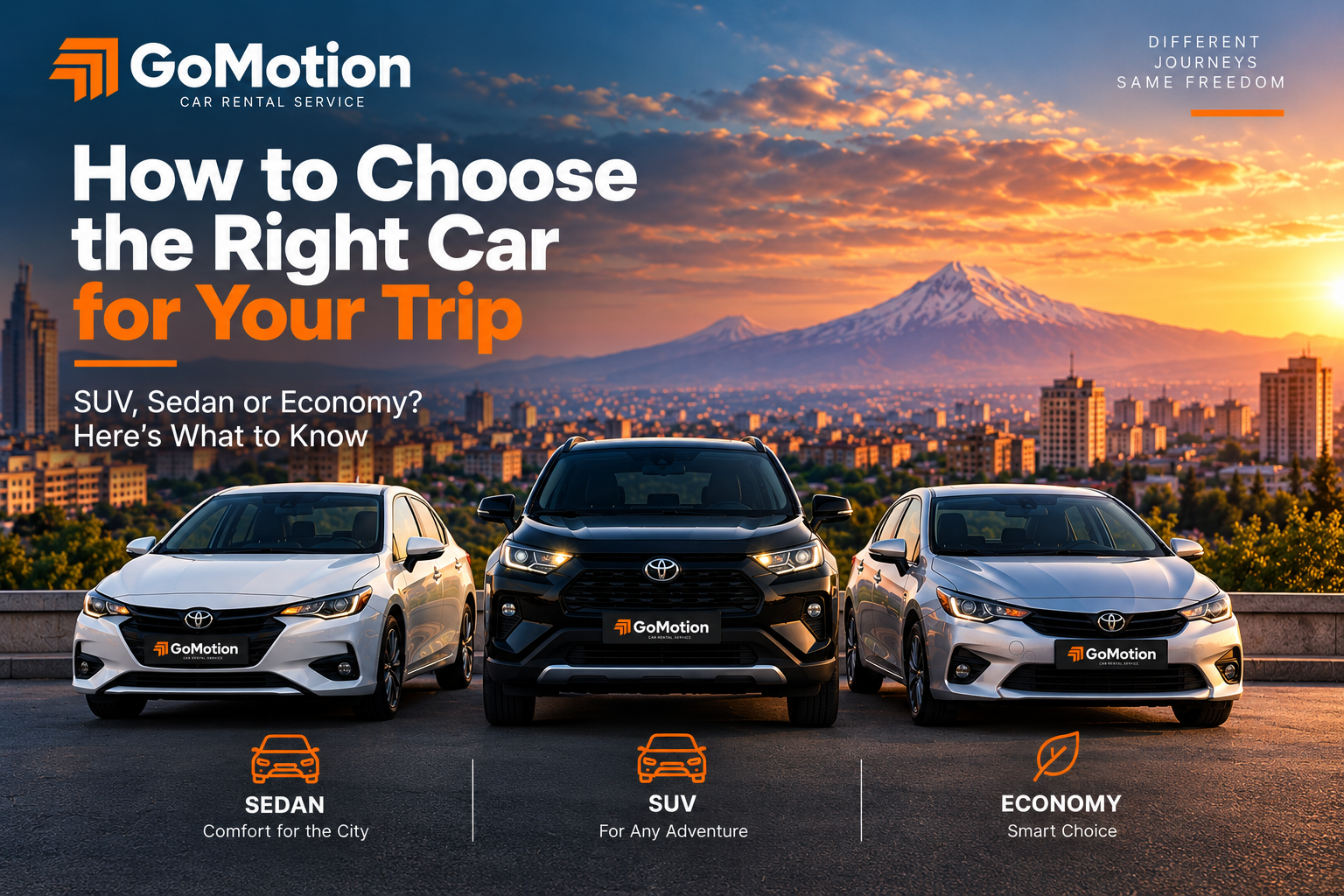
Armenia rewards the right vehicle choice. An economy car is perfect for paved roads and city driving. A sedan handles highways and comfort. An SUV unlocks the full country — mountain passes, remote monasteries, winter travel, and unpaved adventures.
Start with your itinerary, match the car to the roads, and you will get the most out of your trip. Browse the full fleet to see what is available, or go directly to economy cars, sedans, or SUVs to compare.
Ready for Your Armenian Adventure?
Browse our fleet of 80+ vehicles — no deposit, insurance available.
Browse Cars